
If your hot tub is not heating up, the most likely cause is usually an incorrect temperature configuration, a critical restriction in water flow, a heavily soiled filter cartridge, or an activated high-limit safety switch.
Taking care of these issues requires confirming your active thermostat settings, checking the digital panel for flow errors, removing the filter to clear blockages, and verifying the heating indicator light. We at Colorado Pool + Spa Scapes, advise starting with these basic checks to safely restore the temperature and avoid unnecessary repairs.
Immediate Diagnostic Checklist for Spa Owners
A quick, step by step check of your equipment tends to find the problem before a service call. Staring at a cold hot tub on a freezing night is incredibly frustrating, especially when you were looking forward to a relaxing soak. Working through a structured inspection helps you isolate the exact failure point efficiently.
Let’s go through the four basic components you need to check right now to figure out why your hot tub is not heating up.
- Check the Primary Thermostat Settings: Ensure your target temperature is set higher than the current water temperature. Minor power fluctuations or outages can reset your control board to default settings or engage a low-energy sleep mode, causing the heater to stop warming the water.
- Inspect the Control Panel for Active Error Codes: Look for fault messages on your digital display, such as FLO, FL, Low Flow, or HL. These codes indicate that safety sensors have disabled the heater because of restricted water flow.
- Isolate and Clean the Filtration System: A clogged filter often restricts water flow and prevents heating. Remove the cartridge and restart the system. If the error clears and heating resumes, the filter requires cleaning or replacement. If filter cleaning does not restore heat within a reasonable window and the outside temperature is below freezing, component freeze becomes a real risk.
- Observe the Mechanical Heater Indicator Lights: Check for a heat icon or wave symbol on your control board. A solid light confirms the system is calling for heat. If the light is on but the water stays cold, the heating element itself may have failed.
The Threat of Immediate Component Freezing
Where your hot tub is located dictates exactly how fast you need to act on a heating failure. Living in high altitude mountain communities across Colorado presents extreme environmental factors that accelerate equipment damage far faster than warmer climates do. We see the results of this every single winter.
Rapid Crystallization:
When a hot tub stops heating during a freezing mountain night, the timeline to protect your investment shortens drastically. Stagnant water sitting inside thin plastic plumbing lines, pump wet ends, and stainless steel heater manifolds can freeze within just a few hours.
Expansion Damage:
Water expands with incredible force when it transitions to ice. This expansion easily cracks plastic manifolds, splits PVC pipes, destroys expensive union fittings, and warps internal seals. What begins as a simple heater failure quickly escalates into a massive plumbing rebuild if left unaddressed overnight.
Freeze Protection Limitations:
Many systems include an automatic freeze protection mode that circulates water when temperatures drop. While these modes keep water moving, they cannot generate heat if the primary heating element or flow switch is broken. Moving cold water will still eventually freeze when ambient temperatures drop significantly below zero.
 Advanced Mechanical and Hardware Failures
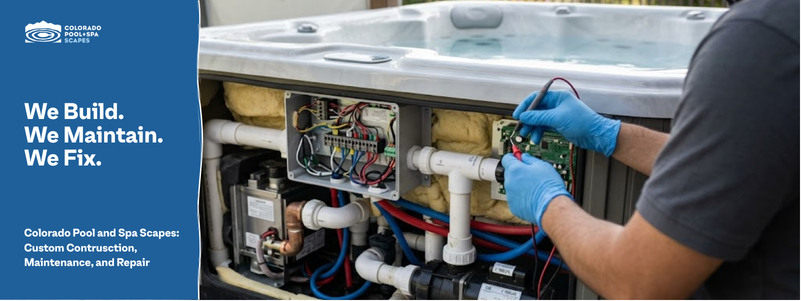
If a quick run through the basic diagnostic checklist does not restore the heating cycle, your spa has likely experienced a localized mechanical or electrical component breakdown. Don’t worry, understanding what is happening under the cabinet helps fix it faster.
Plumbing Airlocks:
Trapped air after a refill stops water movement, triggering low-flow sensors that disable the heater. You can often clear this yourself by slightly loosening the union fitting on the pump discharge until the air hisses out and water begins to flow properly again.
Tripped High Limit Safety Switches:
This safety sensor shuts down the heater if water temperatures inside the manifold exceed safe limits. While some switches reset automatically once the water cools down, others require a manual reset via a physical button located on the spa pack.
Burned Out or Scaled Heating Elements:
Over time, mineral buildup and calcium scaling insulate the element, causing it to overheat and eventually short out. Once the internal coil fails, the element can no longer produce heat, even if the rest of the electrical system is functioning correctly.
Failed Circulation or Jet Pumps:
If the circulation pump fails due to a bad capacitor or seized bearings, water flow stops entirely. Without constant movement across the sensors, the control system will permanently lockout the heating circuit to prevent damage.
Preventing Future Heating Failures
| Issue/Topic | Description/Solution | Prevention/Note |
|---|---|---|
| Plumbing Airlocks | Trapped air stops flow. Loosen pump union to bleed air. | Occurs after refills; check flow immediately. |
| Safety Switches | High-limit switch trips to prevent overheating. Reset manually. | Ensure steady flow to avoid safety shutdowns. |
| Heating Element | Burned out or scaled coils fail to produce warmth. | Maintain pH/Calcium balance to prevent scaling. |
| Pump Failure | Seized bearings or bad capacitors stop circulation. | Listen for unusual motor noises or humming. |
| Filtration | Dirty filters cause FLO errors and heater lockout. | Rinse weekly; replace every 12 months. |
| Thermal Cover | Waterlogged covers lose all insulation value. | Inspect seals/hinges to prevent heat loss. |
 Frequently Asked Questions
Why is my hot tub running but not heating?
A hot tub will frequently continue to run its circulation pumps even if the heating element itself is completely broken or unpowered. The automated control board keeps the water moving to provide basic freeze protection even if the hot tub does not heat up. However, a failed heater element, a blown fuse, or a tripped high limit safety switch will prevent any actual warmth from being added to the water.
How long does a hot tub take to heat up?
On average, a standard hot tub will heat up at a rate of one to three degrees Fahrenheit per hour. A complete heating cycle for a typical four hundred gallon spa can take anywhere from eight to twenty hours to reach full temperature. The exact timing depends on the incoming tap water temperature, ambient air conditions, voltage capacity, and overall insulation quality.
How do I reset the heater on my hot tub?
To perform a complete system reset, locate the main electrical breaker panel outside and flip the dedicated high voltage spa breaker to the off position. Leave the entire system completely unpowered for a minimum of fifteen minutes. This extended pause allows the internal capacitors to drain fully, clearing temporary software glitches and resetting automated flow sensors.
Can a dirty filter make a hot tub not heat up?
Yes, a dirty or clogged filter cartridge is one of the most common reasons a heater shuts down. When debris restricts the volume of water moving through the plumbing, internal sensors immediately detect the drop in flow. To protect the system from overheating, the controller instantly shuts off power to the element and displays an error code.
Protect Your Investment This Winter
If these initial troubleshooting steps do not restore heat by tomorrow morning and the forecast is cold, you are looking at an emergency service situation, not something to wait on. Local winter conditions rapidly transform minor heating issues into major plumbing damage.
If you are dealing with persistent heating issues or need a professional assessment, reaching out for help is the safest route to protect your property in case of for emergency hot tub repair in Colorado to see how we handle these exact situations.
