
A standard swimming pool loses about a quarter of an inch to half an inch of water per day due to normal evaporation. This equals roughly two inches of water loss per week.
In Colorado, high altitude, low humidity, and constant wind can accelerate this natural rate. To determine definitively if your pool is experiencing normal evaporation or an actual structural leak, Colorado Pool and Spa can perform a 24-hour bucket test to compare the water levels.
Understanding Normal Pool Water Evaporation Rates
When managing a property, noticing a lower water line can be a common concern. Before worrying about major repairs, it is important to rule out the most common natural process. Water evaporates constantly.
Property owners frequently ask how much water evaporates from pool surfaces under standard conditions. The following table outlines typical natural water loss for an uncovered pool in a temperate climate:
| Timeframe | Average Water Loss | Impact on System |
| Daily | 1/4 inch to 1/2 inch | Barely noticeable to the eye. |
| Weekly | Approximately 2 inches | May require topping off with a hose. |
| Monthly | 8 inches or more | Hundreds of gallons lost naturally. |
The exact rate of this water loss depends heavily on three main factors:
- Surface Area: Larger pools have more water exposed directly to the air.
- Direct Sunlight: Constant sun exposure naturally heats the water and speeds up the process.
- Water Temperature: A heated pool left uncovered will naturally lose more water than an unheated pool because the warm water molecules are highly active and escape into the air at a faster rate.
The Colorado Climate Effect on Water Loss
National averages and standard estimates do not perfectly apply to every environment. When handling routine pool and hot tub maintenance, Colorado property owners must factor in a highly unique, demanding climate that actively accelerates water loss.
Colorado offers an environment that naturally causes residential pools and spas to lose water at a significantly higher rate than they would in humid, sea-level locations. The table below breaks down the specific localized environmental factors driving this rapid evaporation:
| Environmental Factor | How It Accelerates Evaporation in Colorado |
| High Altitude | Thinner mountain air provides less atmospheric pressure. This lack of resistance allows water molecules to escape from the surface of your pool much more easily. |
| Low Humidity | The notoriously dry air acts like a sponge, constantly pulling moisture directly from the surface of the water to balance the surrounding atmosphere. |
| Wind Exposure | Frequent breezes across the valleys blow away the thin layer of humid air that naturally forms right above the water, continuously exposing the pool to dry air. |
| Temperature Swings | The contrast between intense daytime sunshine and sharp temperature drops at night causes warm pool water to steam away into the frigid atmosphere. |
Because of these intense local factors, what looks like a potential structural leak might simply be a standard summer week in the Rockies.
How to Perform the Bucket Test
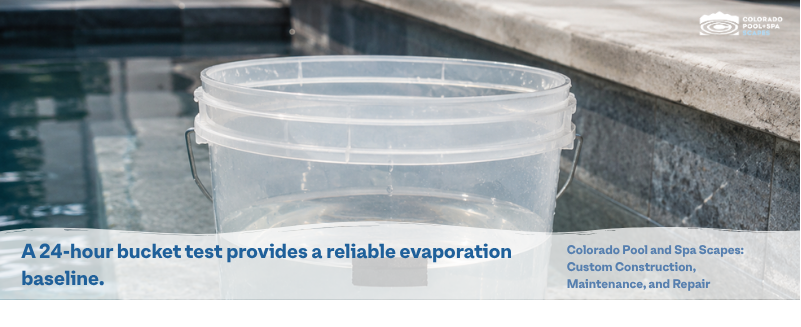
Before starting, ensure there is no rain forecasted for the next 24 hours, as precipitation will skew your results. Here is how to execute the test step by step:
- Bring a clean, empty five-gallon plastic bucket to your pool deck.
- Fill the bucket with water directly from your pool until the water level is about an inch or two from the rim.
- Place the bucket carefully on the first or second step of your pool. The water level inside the bucket should closely match the water level outside the bucket. Ensure the bucket is heavy enough to remain stable and will not tip over.
- Turn off the pool pump, the heater, and disable any automatic fill valves. Wait a few minutes for the water surface to become completely calm.
- Mark the exact water level on the inside of the bucket using a piece of waterproof tape or a dark permanent marker.
- Mark the pool water level on the outside of the bucket using the exact same method.
- Turn your pool pump and normal circulation equipment back on to resume daily operation, but keep the auto-fill valve disabled.
- Leave the bucket in place and wait exactly 24 hours. Keep the pool uncovered during this entire period to allow for maximum natural evaporation.
- After a full day has passed, return to the pool and check both of your marks.
Reading Your Bucket Test Results and Next Steps
If the water level went down by the exact same amount inside and outside the bucket, your water loss is entirely due to natural environmental evaporation. You do not have a leak. You can top off your pool, turn your automatic fill valve back on, and feel completely confident that your plumbing and shell are secure.
If the pool water level on the outside of the bucket dropped significantly more than the water level on the inside, your pool is actively losing water somewhere in the system. The bucket experienced normal evaporation, but the pool experienced evaporation plus a leak.
Frequently Asked Questions About Pool Evaporation
Does a pool lose more water at night or during the day?
Pools often lose more water at night, especially in climates with significant temperature drops like Colorado. When the ambient air temperature falls below the temperature of the heated pool water, the evaporation rate accelerates. The warm water essentially turns to vapor and escapes into the cold, dry night air.
Will a solar cover stop my pool water from evaporating?
Yes, utilizing a high-quality solar cover or a solid winter cover will drastically reduce water evaporation. By creating a physical barrier between the water surface and the open air, a cover can prevent up to ninety percent of normal water loss. This is one of the most effective ways to conserve water and heat.
How do I know if a pool leak is in the plumbing or the shell?
You can run a secondary bucket test to narrow down the source. Perform the test once with the pool pump running for 24 hours, and then again with the pump completely off for 24 hours. If the pool loses more water while the pump is running, the leak is likely in the plumbing lines. If the test indicates a plumbing issue, reviewing our guide on emergency hot tub and pool repair will help you understand the next steps.
Is it safe to let my pool water level drop below the skimmer?
No, allowing the water level to drop below the skimmer intake is dangerous for your pool equipment. If the skimmer pulls in air instead of water, the pool pump can overheat, lose prime, and eventually burn out the motor. Always keep the water level halfway up the skimmer opening.
