
If you find some imperfections in your pool, it doesn’t always mean you need a full remodel. A few warning signs consistently point to structural trouble: cracks that run through the shell rather than just the surface, water loss beyond normal evaporation, rust staining, and coping or decking that visibly shifts or separates from the pool.
Surface issues like rough texture, staining, or flaking plaster often mean resurfacing is enough.
The difference matters, since treating a structural problem as a cosmetic one usually means paying for the same repair twice. Colorado Pool + Spa Scapes walks homeowners through this before recommending any scope of work.
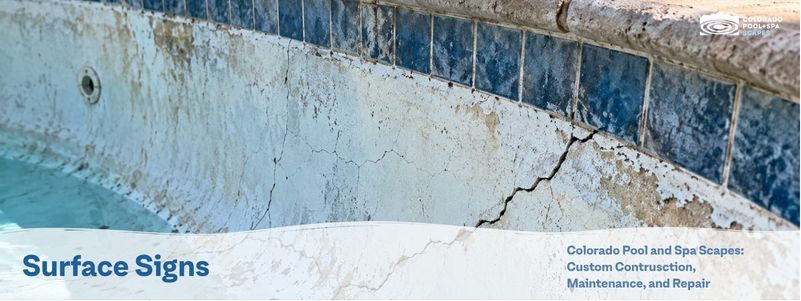
Surface Signs
Surface-level problems are often the first thing homeowners notice, and they’re the most common reason people start looking into a remodel. A few signs worth watching for:
- Rough or pitted texture: plaster that used to feel smooth but now feels sandpapery, especially on the floor and steps, generally signals the finish is wearing thin.
- Flaking or peeling plaster: thin layers coming off the surface, often tied to water chemistry imbalance over time, a finish failure mode the National Plasterers Council tracks as part of its industry standards work.
- Staining or discoloration: stains that don’t respond to cleaning, particularly ones tied to copper or calcium deposits, often indicate the finish itself is deteriorating rather than just dirty.
- Loose pebbles in a pebble finish: individual stones coming loose from the surface means the binder holding them is breaking down, a normal end-of-life sign for that finish type.
Most surface-only issues can be addressed with resurfacing rather than a full remodel, but persistent problems in the same spot are often a signal that something underneath the surface needs attention too.
Finish quality itself is also governed by an actual industry standard: the Pool & Hot Tub Alliance’s ANSI/PHTA-12 standard sets the accepted benchmark for how pool plaster should be mixed, applied, and finished.
Water Loss and Leaks: When It’s More Than Evaporation
Although every pool loses some water to evaporation, in Colorado’s dry, high-altitude climate this is a very common problem. Most pool professionals use a benchmark of up to about a quarter-inch of water loss per day during hot, windy weather.
If you’re consistently losing more than that, or topping off the pool noticeably more often than you used to, evaporation likely isn’t the only factor.
The places where we usually find leaks are cracked tile joints, aging plumbing fittings, skimmers, or the pool shell itself, and the source matters for determining whether a targeted repair will solve it or whether the underlying issue points to a larger remodel. A worn or cracked finish can also let water seep through at a rate that looks like a leak, even when the plumbing itself is fine.
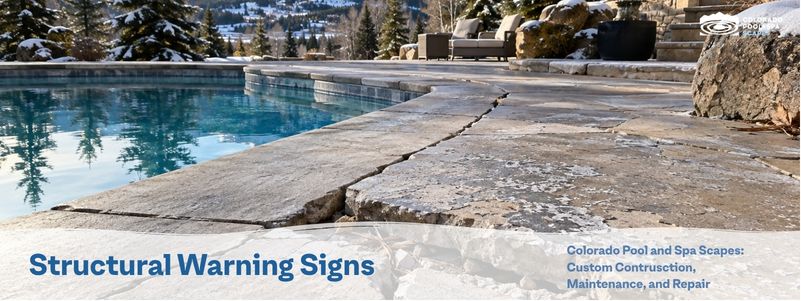
Structural Warning Signs You Shouldn’t Ignore
Some issues are the category that most reliably points toward a remodel rather than a simple repair:
- Cracks that pass through the shell: unlike surface-only hairline cracks, cracks with visible displacement or separation on either side indicate movement in the structure itself.
- Rust staining: brown or red marks are often a sign of corroding rebar beneath the surface, which expands as it oxidizes and can crack the surrounding concrete from the inside out.
- Bulging walls or shifting coping: gaps opening up between the pool and the surrounding deck, or coping stones that have visibly shifted, both point to structural movement rather than a cosmetic issue.
- Cracks at fittings: cracking around return inlets, main drain covers, or light niches is worth flagging even when the rest of the shell looks sound, since fittings are common leak points.
Structural cracks generally need repair before adding any new finish. Plastering over a structural crack without addressing it first tends to telegraph through the new surface within months. Our pool remodel guide covers what a full structural remodel actually involves once these signs show up.
Colorado-Specific Warning Signs
A few warning signs show up more often, or earlier, in Colorado’s altitude and freeze-thaw climate than in milder climates:
- Deck heaving or cracking near the waterline: freeze-thaw cycling stresses concrete and plaster differently than in warmer climates, and cracking near the waterline specifically often traces back to winterization or freeze-related movement.
- Equipment failing well before its expected lifespan: a heater or pump that wasn’t properly rated for altitude can fail years earlier than it should have, which is worth checking before assuming the whole system needs replacing. Our guide to pool heating options in Colorado covers which equipment actually holds up at elevation.
- Recurring finish problems despite proper maintenance: if your pool’s finish keeps failing the same way even though your water chemistry is properly maintained, the real cause is often freeze-thaw stress from winter shutdown, something unique to Colorado’s climate.
Get a Professional Assessment
Not every crack or stain means the same thing, and the only reliable way to know whether you need a resurfacing job or a full structural remodel is a professional assessment. Our team evaluates Colorado pools regularly and can tell you honestly which category your pool falls into before recommending a scope of work.
If you’re already past the “does it need work” question, our pool renovation ideas guide covers what to consider once you’re ready to plan. Contact us to schedule an assessment.
Frequently Asked Questions
How much water loss is normal for a pool versus a leak?
Up to a quarter-inch of water loss per day during hot, windy weather is generally considered normal evaporation. If your pool loses more than that, it could suggest a leak somewhere in the shell, plumbing, or fittings rather than evaporation alone.
Are hairline cracks in a pool serious?
Not usually on their own. Cracks that widen, multiply, or show displacement are a different category and warrant a professional structural evaluation.
How often should a pool be resurfaced?
It depends heavily on the finish type, with plaster typically needing attention sooner than quartz or pebble finishes. Most pool owners resurface based on visible wear, roughness, staining, or flaking, rather than a strict number of years.
Can a cracked pool be repaired without a full remodel?
Often, yes. Localized cracks that haven’t caused significant water intrusion can typically be addressed with targeted repair rather than a full remodel. Wider structural cracks with displacement, or cracks tied to ongoing water loss, usually need a more complete evaluation first.
What causes rust stains in a pool?
Rust stains typically come from corroding rebar or tie wire beneath the pool’s surface and often appear as reddish-brown marks. If left unaddressed, the corroding metal expands and can crack the surrounding concrete, so rust staining is worth evaluating.
