
Yes, you can use a hot tub in winter, even on subzero nights in Colorado’s mountain resort communities.
It’s safe as long as the water stays at or below 104°F, you skip alcohol and you keep exposed skin covered on the walk to and from the tub.
The tub itself needs to stay powered, heated and covered between soaks. If you’ve just arrived at altitude, one more rule applies.
Key takeaways
- There’s no official minimum air temperature for soaking; the risk is exposed skin on the walk.
- At 0°F with a 15 mph wind, exposed skin can freeze in about 30 minutes.
- Visitors should skip alcohol for the first 48 hours at high altitude, in or out of the tub.
- A tub that loses power or heat in a freeze can be damaged quickly.
Is It Safe to Use a Hot Tub in Winter?
Yes, with a few rules for you and a few for the tub. They’re the same whether you soak in Aspen, Vail or Steamboat Springs.
Rules for You
From CDC hot tub guidance:
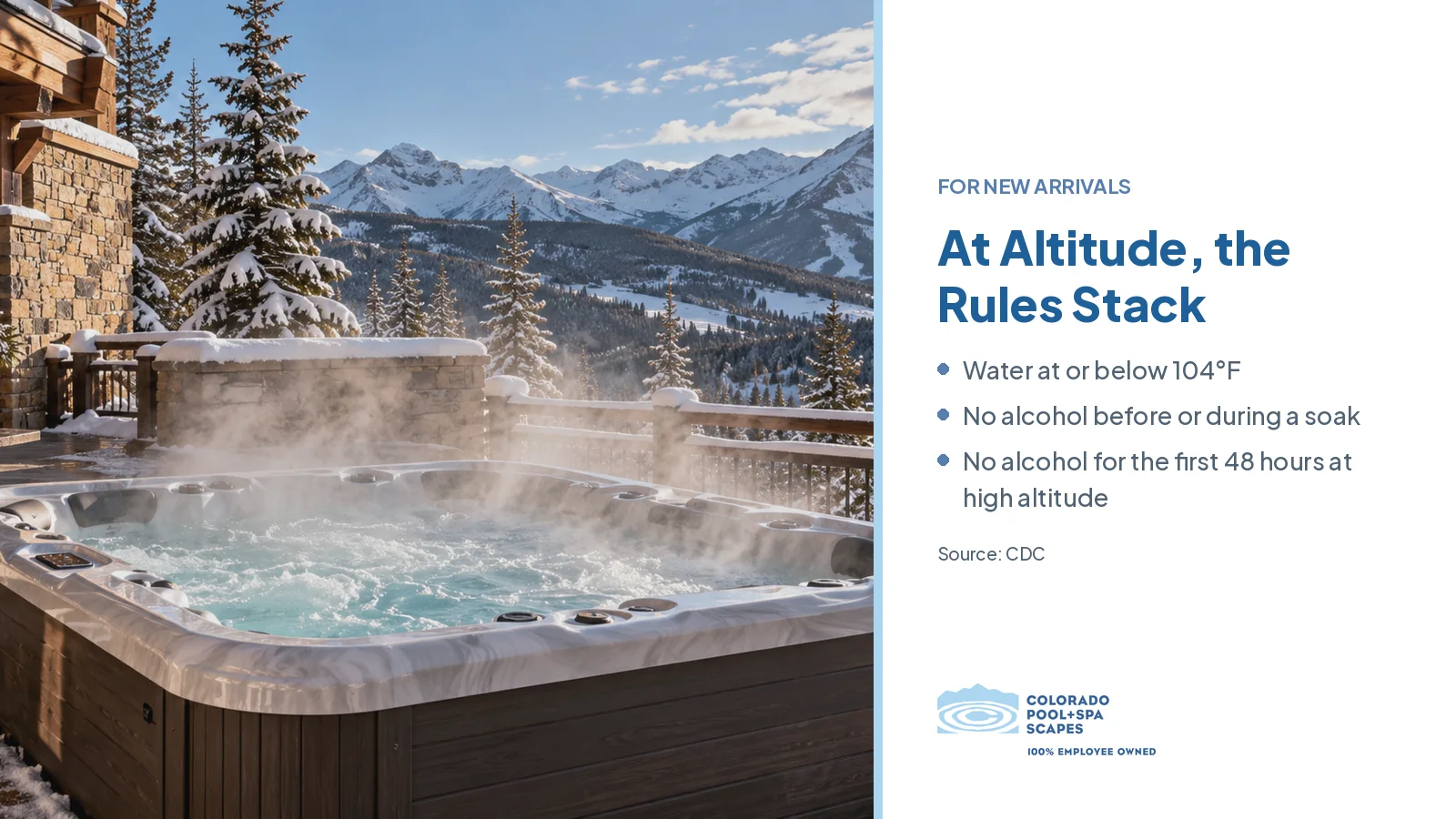
- Keep the water at or below 104°F (40°C).
- Don’t drink alcohol before or during use.
- Don’t let children under 5 use hot tubs.
- If you’re pregnant, talk to a healthcare provider first.
Rules for the Tub
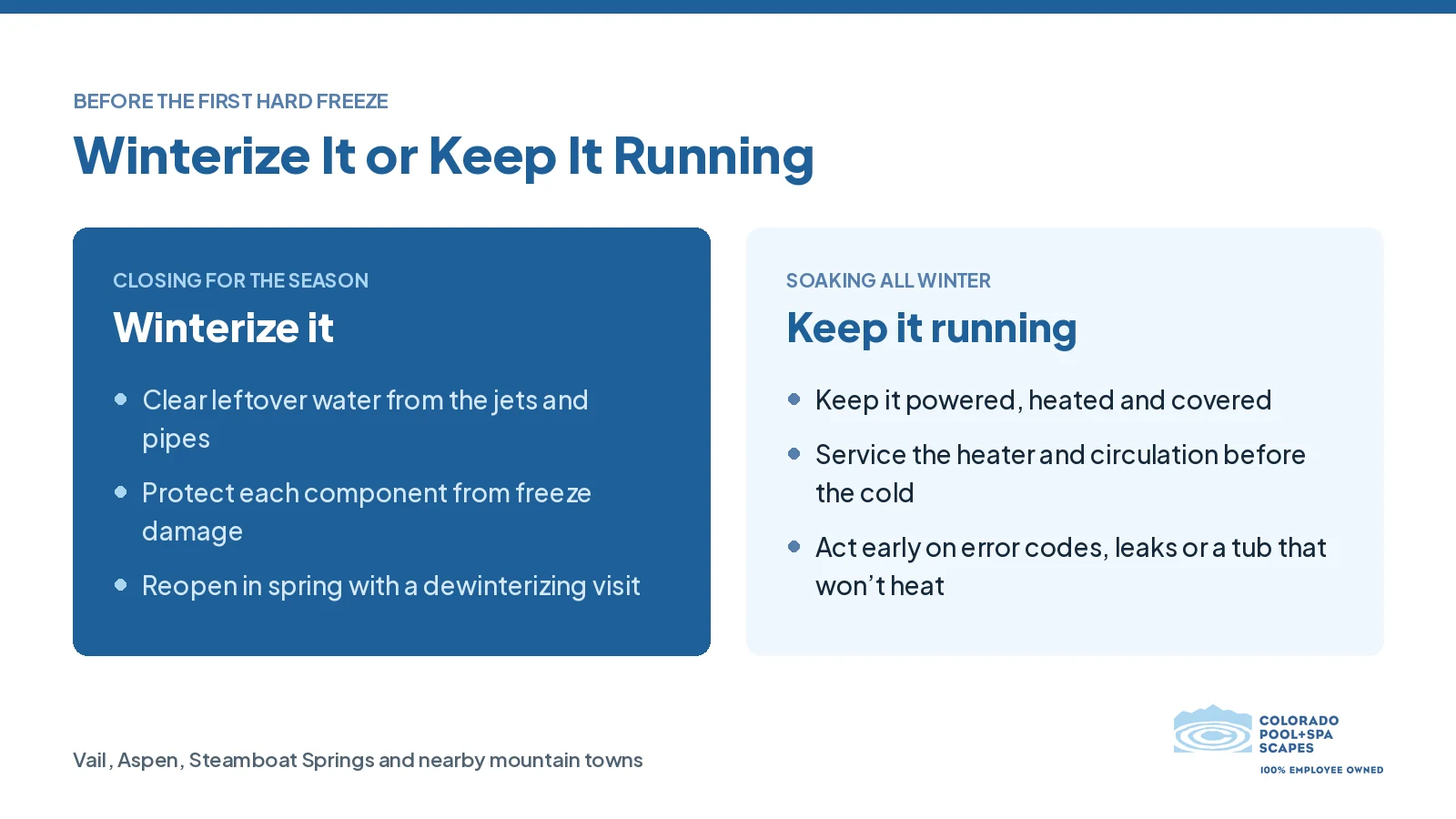
- Keep it running. Leave it powered, heated and covered between soaks. As the repair team at Colorado Pool + Spa Scapes warns, freezing temperatures can turn a small issue into major damage fast.
- Service it before the cold. Regular hot tub maintenance keeps the heater and circulation dependable before a cold snap, not after.
Cover care, freeze protection and rental-home routines are the other half of using a hot tub in winter in Colorado.
How Cold Is Too Cold to Use a Hot Tub?
Neither the CDC nor the National Weather Service sets a minimum air temperature for soaking, so there’s no official cutoff. What matters is how much skin is exposed, and for how long.
Wind Chill and Frostbite
The NWS wind chill index measures how fast wind and cold pull heat from exposed skin. At 0°F with a 15 mph wind, the wind chill is -19°F and exposed skin can freeze in 30 minutes.
Frostbite only happens when the actual air temperature is below freezing. Use the table to plan the walk to the tub, not the water temperature.
| Air temp | 5 mph wind | 15 mph wind | 25 mph wind |
|---|---|---|---|
| 30°F | 25°F | 19°F | 16°F |
| 20°F | 13°F | 6°F | 3°F |
| 10°F | 1°F | -7°F | -11°F |
| 0°F | -11°F | -19°F | -24°F |
| -10°F | -22°F | -32°F | -37°F |
Wind chill values calculated from the NWS formula and rounded. The index applies at 50°F or below, with wind above 3 mph.
Keep the Walk Short
The NWS advises extra caution for children, older adults and anyone with compromised health. Wind chill can’t cool the tub or pipes below the actual air temperature, but it does make them lose heat faster.
The colder and windier it gets, the shorter the walk should be. Keep a robe, a hat and dry footwear at the tub.
Using a Hot Tub at High Altitude in Colorado
Much of Colorado’s hot tub country sits high. The CDC’s Yellow Book puts lodging in Vail at about 8,150 feet.
No Alcohol for the First 48 Hours
The CDC’s altitude guidance says to skip alcohol for the first 48 hours at high altitude. Its hot tub guidance already says no drinking before or during a soak. Put the two together and a guest who landed today shouldn’t be drinking in the tub tonight or tomorrow.
Know the Signs of Altitude Sickness
Neither CDC page mentions the other, so it’s on you to stack the rules. A few things from the altitude chapter are worth knowing:
- Most of the body’s adjusting happens in the first 3 to 5 days.
- Roughly 1 in 4 visitors who sleep above 8,000 feet in Colorado get acute mountain sickness.
- It feels a lot like a hangover: a headache, often with dizziness, fatigue or nausea.
Feeling like that after a soak? Don’t write it off as too much hot water. It could be altitude illness, so check in with a healthcare provider.
How to Get In and Out of a Hot Tub in Winter
Check the water first: 104°F is the ceiling. After that, it’s all about the deck.
Getting In and Out
Shovel and de-ice the steps, since the CDC’s rule against slippery surfaces covers ice too. Keep the robe and towel within arm’s reach of the tub, and close the cover the moment you’re out.
What Are the Downsides of Using a Hot Tub in Winter?
Winter soaking comes with three real trade-offs.
Cold, Heating Demand and Freeze Risk
- Cold on the way in and out. The walk is the coldest part of the soak.
- Higher heating demand. Holding hot water in freezing air raises the cost to run a hot tub in winter, especially with a worn cover.
- Freeze risk if something fails. A heater fault, a power loss or a leak in sub-freezing weather escalates quickly. If the tub is leaking, not heating or flashing error codes, emergency hot tub repair covers heater repair, freeze damage and winter damage inspection.
Get Your Hot Tub Ready for Winter
Whether you soak all season or close the tub until spring, the prep happens before the first hard freeze.
Winterize It or Keep It Running
If you won’t use your tub this winter, a hot tub winterizing service clears leftover water from the jets and pipes so it can’t freeze and expand.
If you will, Colorado Pool + Spa Scapes serves hot tub owners in Vail, Aspen, Steamboat Springs and nearby mountain towns, and the team can walk through what your tub needs for the season.
Winter Hot Tub FAQs
Can you get sick from using a hot tub in the cold?
Not from the cold air alone. The real risks are getting chilled on the walk back and soaking in water that isn’t kept clean. Cover up, head straight inside, and check the water: the CDC wants chlorine at 3 ppm or higher, or bromine between 4 and 8 ppm.
What is the disadvantage of owning a hot tub?
Upkeep, mostly. Water care, regular service and the odd repair come with the territory, and the heater works harder when it’s cold out. Winter adds one more: if the heater or power fails, the tub can freeze. Spotting an error code early beats fixing freeze damage later.
Can children use a hot tub in winter?
The CDC says children under 5 shouldn’t use hot tubs at all. For older kids, keep soaks short, keep the water at or below 104°F and keep the walk back inside quick, since the NWS advises extra caution for children in wind chill.
How do you protect a hot tub in winter?
Keep it powered and covered with a well-fitting, insulated cover, and keep up routine maintenance before the cold arrives. Act early on warning signs such as error codes, a tub that won’t heat or a leak. A worn cover loses heat, so replace it when it stops insulating.
