
Using a hot tub in winter is the main reason most people in Colorado’s mountain resort communities buy one. A covered tub that keeps running holds its heat through subzero nights and protects itself from freezing.
What separates a great winter from a frustrating one usually comes down to the cover, the water level, a few safety habits, and what happens when nobody is home.
Key takeaways
- Winter is when mountain owners use their tubs most, and a running, covered tub doesn’t mind subzero air.
- The real risks are a power outage or low water, because freeze protection needs both.
- 104°F is the ceiling the CPSC recommends. The icy walk to the tub is often the bigger hazard.
- Push snow off the cover after storms and top off the water as the dry air pulls it down.
- A second home needs someone lifting the lid, not just a timer.
Why Winter Is Hot Tub Season in Colorado
At sea level, a hot tub is a summer backyard feature. Up here it works the other way around.
The phone starts ringing in October. Most buyers want a tub in before the first big storm, because sitting in hot water while it snows is the whole point.
Winter is when owners use their tubs most:
- After a day on the mountain. Warm water is where tired legs loosen up after skiing, skinning, or shoveling.
- Short days. It gets dark early, and a soak under clear mountain skies fills those long evenings.
- Guests and rentals. In ski towns, a hot tub is one of the first things visitors ask about.
How a Hot Tub Handles Colorado Cold
A modern hot tub is a heavily insulated box of water with a heater and pumps, and cold air alone does not hurt it.
Problems start when one of the systems that keeps it warm stops doing its job.
The Cover Does Most of the Work
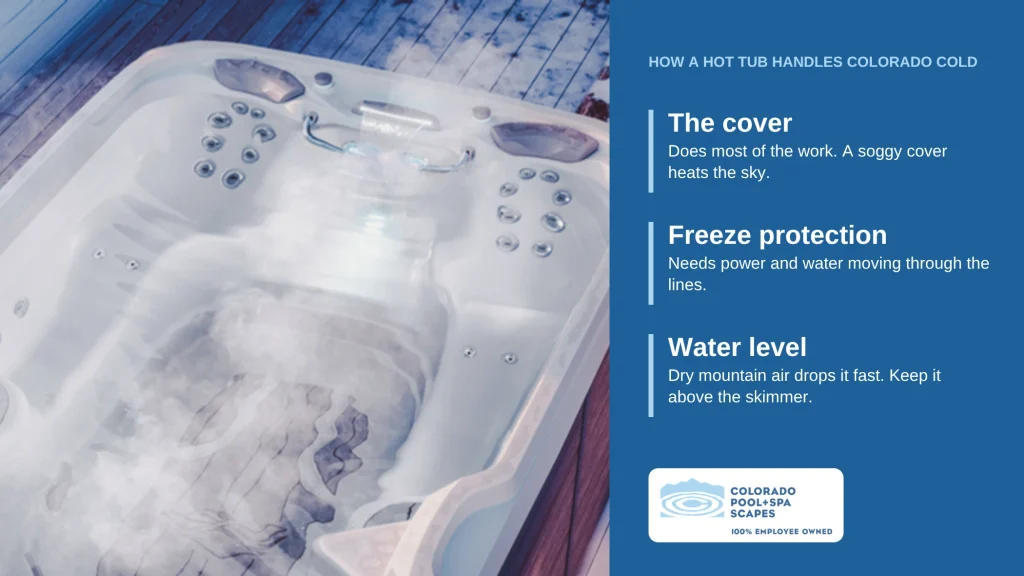
Heat leaves a hot tub through the surface. The cover is the main thing stopping that.
With a tight cover, a tub barely notices it’s ten below. With a waterlogged one, you’re heating the sky.
A cover that feels heavy, sags in the middle, or no longer seals at the edges has soaked up water and lost its insulation.
If yours shows those signs, it’s probably time to replace your spa cover. You can compare hot tub covers before you order.
Freeze Protection Needs Power and Water
Most modern tubs have a freeze protection mode that runs the pumps when the water or equipment gets too cold. It works well, as long as two conditions hold.
It isn’t magic, though. It needs electricity and water moving through the lines, and if either one stops on a cold night, you have hours to fix it, not days.
That’s why an outage or low water on a cold night is urgent. If the display shows an error or the tub stops heating, call for emergency hot tub repair in Colorado the same day.
What Changes at Elevation
Altitude is where national hot tub advice starts to fall apart.
- The air is dry. Water leaves the tub faster than it would somewhere humid, so check the level every week or two.
- The sun hits harder. The EPA puts the jump in UV at roughly 6% for every kilometer of elevation. On a bluebird day at 8,000 feet, sanitizer disappears fast.
- The water is hard. In Eagle, for example, town water averages 14 grains per gallon, very hard by the USGS scale, according to the Town of Eagle. Let the chemistry slide and that calcium ends up as scale on your heater.
How to Use a Hot Tub in Winter Safely
104°F: the maximum hot tub water temperature recommended for adults, according to the U.S. Consumer Product Safety Commission.
When you use a hot tub in winter, the cold air makes the water feel even better, and that tempts some owners to turn the heat up. Stay at or below 104°F.
The CPSC also notes that hot tub thermostats can be off by as much as four degrees, so check the water with a separate thermometer now and then.
| Stage | What to do |
|---|---|
| Before you head out | Shovel and salt the path. Robe and sandals go by the door. |
| Getting in | Fold the cover all the way back so the wind can’t catch it, and hold the rail on the way in. |
| While you soak | Keep a water bottle close and leave the beer inside. Feeling dizzy or too hot? Get out. |
| Getting out | Robe on first, cover closed second, then go in. |
The bigger winter hazard usually isn’t the water. It’s the icy walk to get there.
Put the tub where the path gets sun, or plan on keeping it clear all season.
Still deciding where a new tub should go? Our team can look at the site, the electrical, and the path from your door before you choose from our hot tubs for sale in Colorado.
What a Winter Hot Tub Needs From You
Not much, honestly.
- Water level first. Dry air pulls the level down every day. Once it drops below the skimmer, the pumps suck air and freeze protection loses its flow, so top it up with a hose on a warmer afternoon.
- Snow on the cover. Wet snow is heavy, and a week of it can bend the foam core and crack the hinge. Push it off with a soft broom, never a shovel.
- The filter. When it clogs, circulation slows and many tubs throw a flow error. If the water won’t warm up, start there, then work through the rest of this hot tub not heating up checklist.
- After guests leave. A full house over the holidays chews through sanitizer. Test the water the morning after they go.
- Power outages. Leave the cover on and don’t drain it. If the power stays off for more than a few hours on a cold night, call us.
Not interested in keeping track of all that? A hot tub maintenance plan puts one of our technicians on a regular schedule all season.
Vacation Homes and Rentals in Winter
Second homes are where most winter trouble starts. The owner leaves after New Year’s, the power blips in February, and nobody knows for two weeks.
A remote monitor helps, but someone still needs to lift the lid.
If the tub sits at a property you aren’t at every week, plan for that:
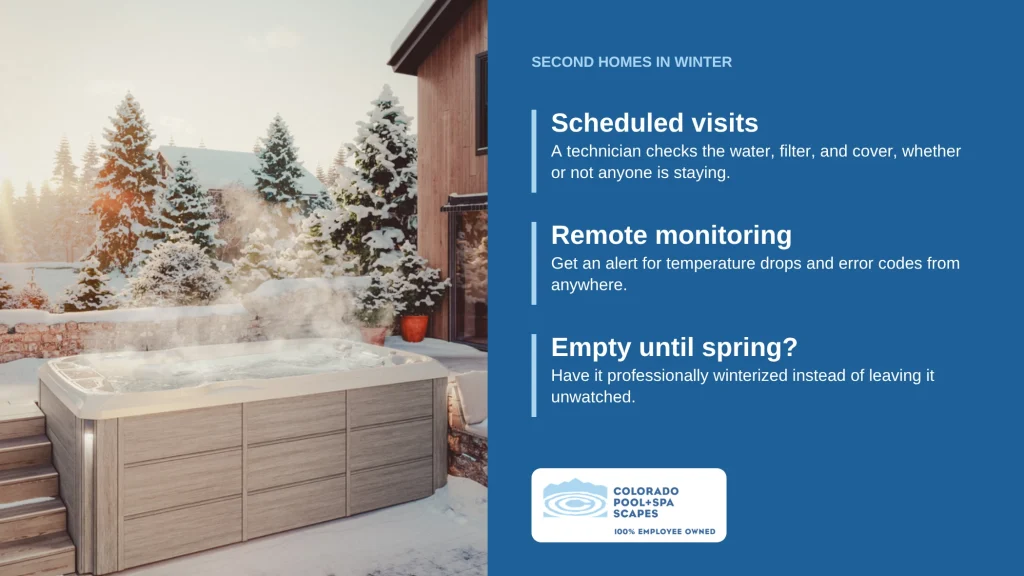
- Scheduled service visits. A technician checks chemistry, water level, filter, and cover condition on a set schedule, whether or not anyone is staying.
- Remote monitoring. Smart tub technology can alert you to temperature drops and error codes from anywhere.
- Guest instructions. A short card by the door that explains the cover, the temperature, and who to call prevents most rental problems.
- Using it this winter, or not? If the place sits empty until spring, have the tub professionally winterized instead of hoping it rides out February on its own. Here’s how to winterize a hot tub the right way.
Winter Mistakes That Cost Owners the Most
| Mistake | What actually happens | Do this instead |
|---|---|---|
| Shutting the tub off to save on power | There’s no circulation, and the lines can freeze within hours | Leave it on and drop the temperature a few degrees while you’re gone |
| Draining it yourself in January | Water hides in the low spots of the plumbing and splits it | Have a technician winterize it |
| Waiting on an error code until morning | A small fault can turn into freeze damage overnight | Look up the code, then call that day |
Winter Hot Tubs With Colorado Pool + Spa Scapes
Colorado Pool + Spa Scapes is employee-owned and based in the mountains, with offices in Avon and Glenwood Springs.
If you’re shopping for a hot tub in Colorado, we’ll help you choose between a Sundance spa and a custom tiled hot tub, plan where it goes before the snow does, and keep it running once it’s in.
That includes maintenance, winterizing, and the repair calls nobody wants to make in January.
Custom Sundance orders usually arrive in 6 to 8 weeks, so October is a good month to start.
- Vail and Steamboat: 910 Nottingham Road N12, Avon, CO 81620
- Aspen and Snowmass: 5308 County Road 154, Glenwood Springs, CO 81601
- Phone: 970.945.8775, Monday to Friday, 8am to 4:30pm. Showrooms open by appointment.
Frequently Asked Questions
Is it OK to use a hot tub when it’s snowing?
Yes. Soaking while it snows is one of the best parts of using a hot tub in winter in the mountains.
The water stays warm as long as the tub is running and you close the cover once you’re out. Watch your footing, since fresh snow hides ice on decks and steps.
What temperature should a hot tub be in winter?
Most owners keep their tubs between 100°F and 104°F in winter, and the U.S. Consumer Product Safety Commission recommends never going above 104°F for adults.
Thermostats can read a few degrees off, so check the water with a separate thermometer from time to time, especially after a power outage or a repair.
Do you need to drain a hot tub for winter in Colorado?
Not if you plan to use it. A tub that keeps running with good circulation and a tight cover is safe through a Colorado winter.
Draining only makes sense if the tub will sit unused until spring. In that case, book a professional hot tub winterizing service, because water left in the plumbing can freeze and crack it.
How long can you stay in a hot tub in cold weather?
Healthy adults don’t have a hard cutoff. It depends on how hot the water is, how cold and windy the night is, and how you feel.
A soak at 104°F should be shorter than one at 100°F. If your heart races or you feel lightheaded, get out and warm up inside.
